
Hospitality & Catering
The discovery of a new dish contributes more to the happiness of mankind than the discovery of a star.
– Jean Anthelme Brillat-Savarin
Food Technology, Hospitality & Catering Curriculum Intent Statement
At Looe Community Academy, our Food curriculum is designed to nurture curiosity, deepen understanding, and empower every learner to engage creatively and critically with the world of food. We believe that knowledge is connected, not fragmented, so our curriculum builds meaningful links between practical skills, nutrition, sustainability, and cultural heritage, enabling students to see patterns and purpose in what they learn and cook.
Central to our curriculum are the big ideas of Safety, Food Skills, Nutri prep, and Food Future. These concepts underpin every unit, helping students explore how food choices shape health, identity, and the environment. Through these lenses, learners develop confidence in the kitchen, mastery of essential techniques, and the ability to make informed decisions about what they eat and why.
We aim to provide high challenge with low threat, creating a culture where students feel safe to take creative risks, experiment with flavours, and develop independence. Through rich encounters with diverse cuisines—from global dishes to local seafood traditions—students learn to question, interpret, and innovate. They study nutrition and dietary needs, explore ethical and sustainable food practices, and connect their learning to real-world hospitality and catering opportunities.
Our curriculum prioritises practical competence, cultural understanding, and academic depth. Students learn the craft of cooking while developing curiosity through sensory analysis, food provenance, and links to science and geography. They are encouraged to ask questions, make connections, and express themselves through creative dishes, preparing them for life beyond the classroom.
Ultimately, our intent is to ignite a lifelong passion for food, equipping students with the skills, knowledge, and creativity to thrive as thoughtful cooks, informed consumers, and innovative professionals in an ever-changing world.
Progression from Key Stage 3 to Key Stage 4
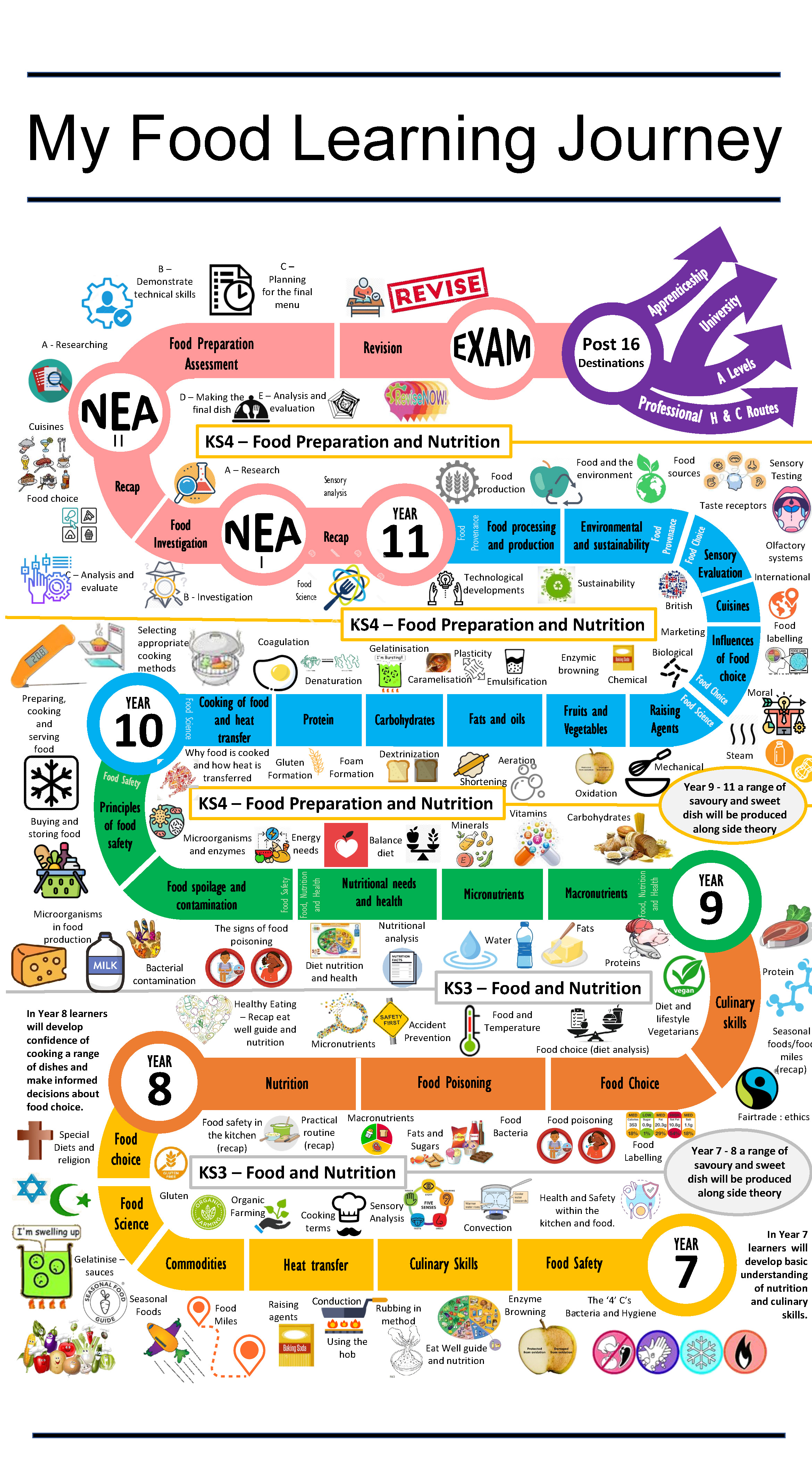
Our curriculum is spiralled and challenging, revisiting key concepts at increasing levels of complexity:
-
Key Stage 3: Students begin with the foundations—safe working practices, hygiene, and basic food preparation. They learn essential knife skills, simple recipes, and the principles of healthy eating. As they progress, they explore global cuisines, local food heritage, and sustainability, applying nutritional knowledge to create balanced meals. They also develop an understanding of allergens, dietary needs, and cultural food preferences.
-
Key Stage 4: Challenge deepens as students master advanced cooking techniques and apply theory to practice. They study hospitality and catering in depth, including menu planning, food presentation, and customer service. Learners engage with industry standards, ethical sourcing, and sustainability, while developing entrepreneurial skills and exploring career pathways. Written analysis, evaluation, and practical assessments prepare students for GCSE success and future opportunities in the food and hospitality sector.
Curriculum Pathways
Additional Opportunities Beyond the Classroom
- Fish mongers and farmers
- Local AA chefs
- Sustainable living
- Navy involvement
- Catering for events
- Alumni Daniel Lewis Cfe in Plymouth